

A used part can match your part number and still arrive cracked, missing its fittings, or pulled from a machine built to a different specification. The number shows which part it is. It does not show what condition the part is in. Before you pay, get six answers in writing: the donor machine's model and serial, why it was dismantled, what is missing, what the seller checked, how the part was packed, and the return terms.
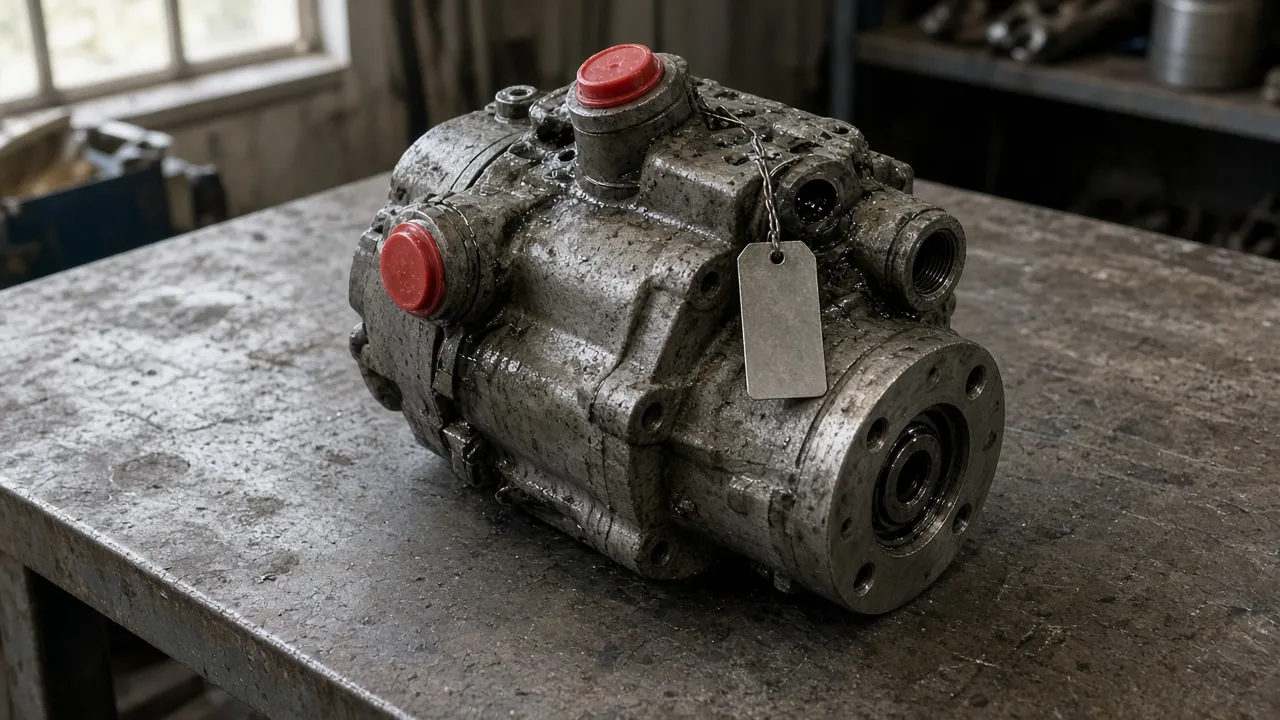
A used hydraulic pump on a workshop bench. The tag is blank. Two ports have red plastic caps, and the port on the right is open.
This page is a blank acceptance record for one used part. Fill it in from the seller's written answers, then check the part against it when it arrives. The page does not grade a part, estimate how long it will last, give a price, or confirm that it fits your machine.
Quick view
Swipe or scroll horizontally to view the full table.
| Item | What to get from the seller | Why it matters |
|---|---|---|
| Part label | A photo of the label on the used part itself | Ties the offer to one part, not to a listing title |
| Donor model and serial | The model and serial as printed on the donor machine, or "unknown" | The model name alone does not identify the machine's specification |
| Reason dismantled | The seller's reason, or "unknown" | Tells you whether the part was near the damage |
| Missing items | What is not on the part: fittings, sensors, brackets, caps | A lower price can mean less part |
| What was checked | The check the seller names, and its record, or "not stated" | "Good condition" is a description, not a check |
| Packing | How the part will be packed and how open ports will be closed | Damage in transit is easier to claim when the packing was written down |
| Return terms | The terms as the seller writes them, or "not stated" | A return follows what was written, not what was said |
"Unknown" and "not stated" are answers you can record. An empty cell means you have not asked yet.
Why is a matching part number not enough?
A part number identifies a part. It says nothing about the wear, damage, or missing pieces on the one unit a seller is offering. Settle the identity first, then judge the condition as a separate question.
For identity, use how to find a SANY part number to copy the number, and how to tell a genuine SANY part from a copy to compare the label and markings with your removed part. When you ask the seller for photos, the steps in how to photograph a part for identification show which views to request. A photo of the label on the used part goes in the first cell of the record.
Which machine did the part come from?
Ask for the donor machine's model and serial, copied from the donor's own plate. A listing title or a stock number is not a serial.
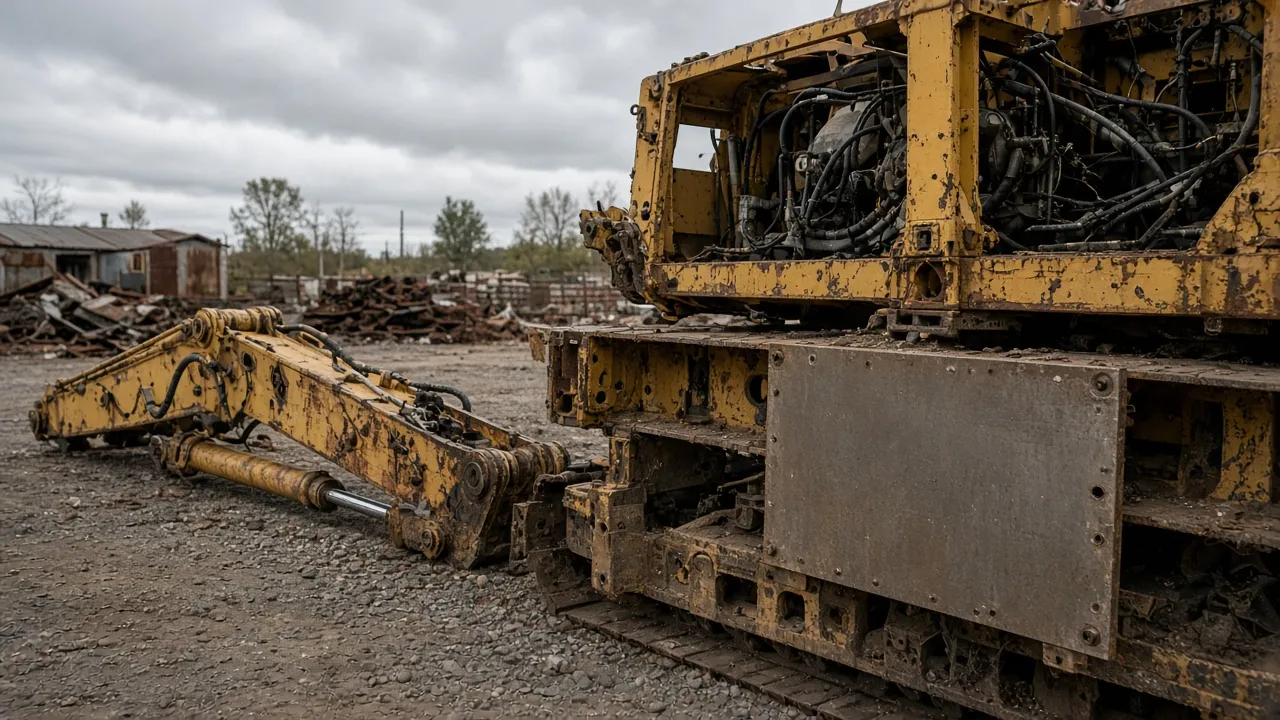
A partly dismantled excavator in a yard. The boom and arm lie on the gravel, and a blank steel plate is fixed to the frame.
Some dismantlers publish this. One US dismantler listing we read on 11 October 2026 named the year, model, machine serial and stock number of a dismantled SANY excavator. The same listing described its parts only in general words, such as "lots of good parts", with no record for any single part. A listing like that gives you the donor. It does not tell you the condition of the part you are buying.
The serial matters because machines with the same model name are not always built the same way. SANY UK & Ireland's guidance on used and imported machines, published 1 July 2026, says machines built for other markets can differ in specification, software configuration, and technical documentation, and that specification differences may affect parts availability. Its advice is to give the serial to a local authorised dealer to check a machine's origin and support status. In the US and Canada, SANY America's dealer locator finds an authorised dealer by city, state, or ZIP code.
That guidance is about whole machines in the UK and Ireland. Our reading is narrower: if the donor was built for a different market from your machine, record that and treat fit as unconfirmed until the serials have been checked. If the seller cannot give a donor serial, write "unknown".
To read your own machine's plate, use how to read a SANY excavator nameplate.
Why was the donor dismantled?
Ask the seller to write down why the machine was taken apart, or to write "unknown". The reason tells you where to look. A machine dismantled after damage to one area puts parts from that area under more suspicion than parts from the other end of the machine. The seller's reason is still the seller's statement. Record it, then check the part.
What is missing from the part?
List what is not on the part as offered. Compare it with your removed part or with photos of it: fittings, sensors, connectors, brackets, mounting hardware, and the caps or plugs on open ports. Ask the seller to confirm in writing which items are included.
Two used parts with the same number can be offered with different items attached. Compare offers on the same list of items, and write each missing item down before you pay.
What did the seller actually check?
Write down the check the seller names, in their words, and what it covered. "Looks good" or "good condition" describes the part. It does not record a check. If the seller names a test, ask for the record of it: what was tested, when, and what result was written down. If the seller names no check, write "not stated".
This page does not say which check a used part should pass, or what result is acceptable. That depends on the part, and the seller has to state in writing what was checked.
How will it be packed, and what arrives?
Ask how the part will be packed and how open ports will be closed for shipping. Write the answer on the record.
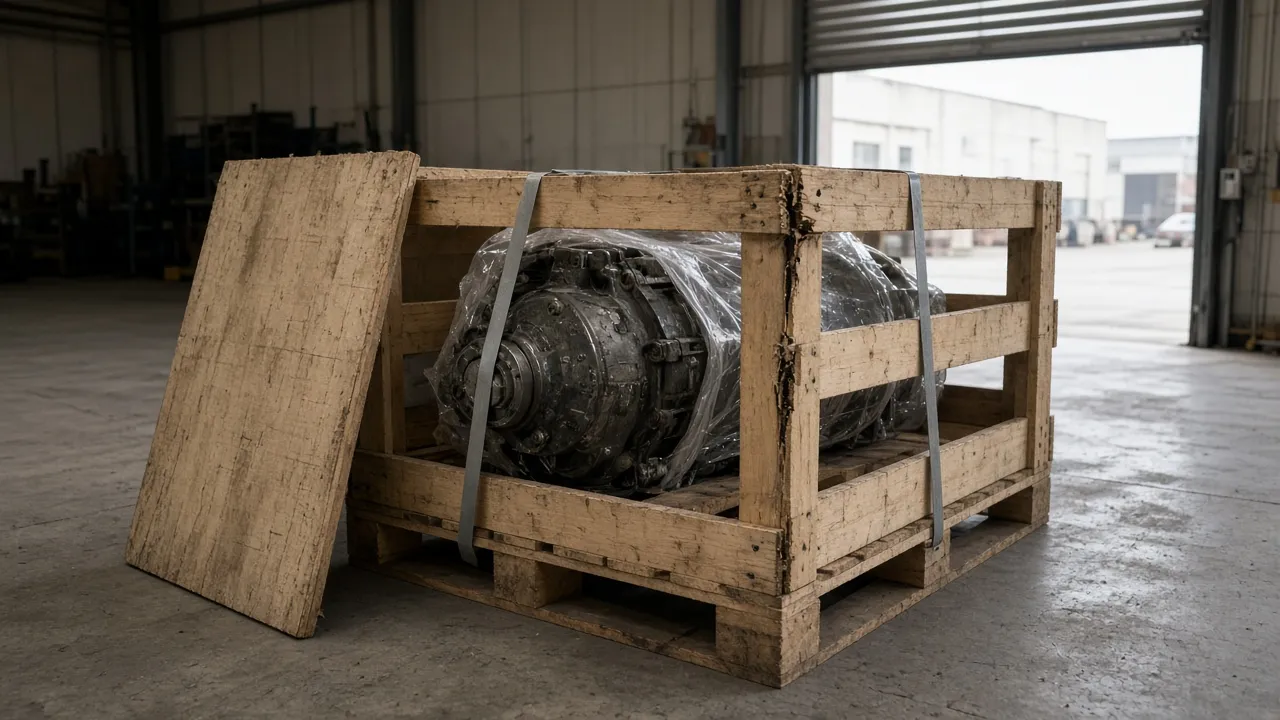
A used component wrapped in film and strapped inside an opened wooden crate. The lid leans against the side, and one corner post is split.
When it arrives, photograph the packing before you open it, then the part from every side. Note any damage on the delivery paperwork before you sign it, if the carrier allows that. Compare the part with the label photo and the missing-items list you recorded before payment.
What return terms are written?
Copy the return terms exactly as the seller wrote them. Check that they answer three questions: can you return a part that does not fit, can you return a part whose condition differs from what was written, and who pays to ship it back. If the terms do not answer one of these, write "not stated" for that question.
A seller who will not put return terms in writing has given you an answer. Record it before you pay.
The used-part acceptance record
Fill the seller column before payment and the arrival column when the part is in your hands. Leave a cell blank until you have the answer.
Swipe or scroll horizontally to view the full table.
| Item | Seller's written answer, or "not stated" | Your check on arrival |
|---|---|---|
| Part label (photo) | ||
| Donor model | ||
| Donor serial | ||
| Reason dismantled | ||
| Missing items | ||
| Check performed and its record | ||
| Packing and port closure | ||
| Transit damage | ||
Return terms: wrong fit, condition, return freight |
The offer is not ready to pay for when any of these is true:
- The part label cell is blank.
- The donor serial is blank. "Unknown" is an answer, and it means fit is unconfirmed.
- The check cell is blank. "Not stated" is an answer, and it means the condition rests on photos alone.
- The return terms are blank, or say nothing about a part that does not fit.
What this page does not decide
- Whether a used part fits your machine.
- Which check a part should pass, or what result is acceptable.
- How long a used part will last, or a wear limit.
- Price, stock, or lead time.
- Whether to buy a used part, a new part, or a whole machine.
What to send us
Used is not one of the supply types we quote. We are an independent exporter in Changsha, not SANY Group and not an authorised dealer, and we quote original, specified-quality, or a named replacement part, as set out on our about page. If the used offer leaves too many blank cells, you can compare it with a part we can supply. Start with three items.
Swipe or scroll horizontally to view the full table.
| Item | Why we need it | Example format |
|---|---|---|
| Full model | Identifies your machine, not the donor | The model as printed, or "unreadable" |
| Serial | We check a part against the serial range we confirm | The serial as printed, or "unreadable" |
| Old-part label | Identifies the part itself | A photo of the label, or "no label" |
Send your machine's full model, serial, and a photo of the old-part label with the button below. We confirm compatibility against your serial and tell you which supply type we can deliver. Claim terms are written on each quotation. That reply does not confirm stock or a price, and it does not grade the used part you were offered.
Method note
The sentences about our supply types, compatibility checks, and claim terms come from this site's published about page. The donor-listing example comes from one US dismantler's listing page, read on 11 October 2026; its words stay that seller's description. The note on machines built for other markets comes from SANY UK & Ireland's "Used or Imported SANY Machines – Official Guidance", published 1 July 2026 and read on 11 October 2026. It covers whole machines in the UK and Ireland, not the condition of parts. The dealer locator sentence comes from SANY America's Find a Dealer page, read on 11 October 2026. SANY's global parts page, read the same day, carries service links and no condition information for used parts. No part was inspected or tested for this page. The photographs show a typical used part, a shipping crate, and a dismantling yard; no part number is shown.
Last reviewed: Oct 14, 2026