

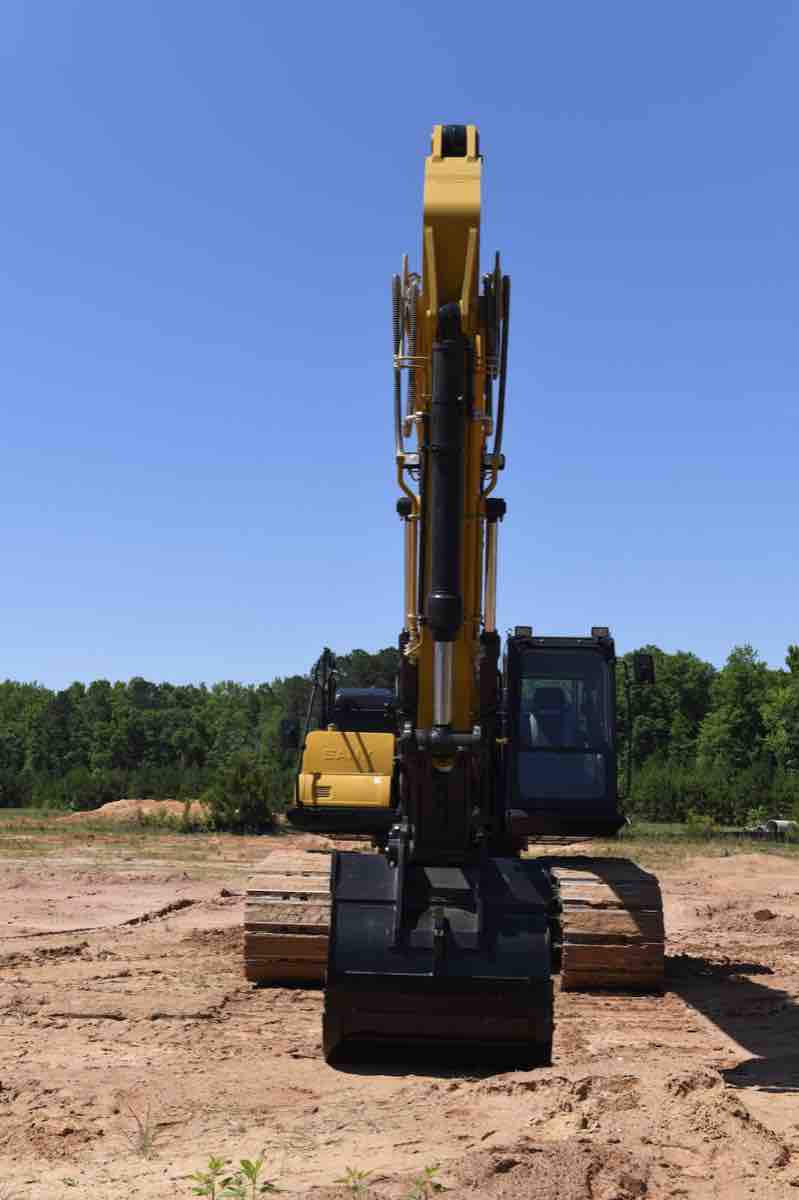
The travel motor converts hydraulic pressure and flow into rotation. The final drive reduces that rotation through gears and delivers higher torque to the track sprocket. On many excavators the motor, reduction gearbox, brake and valves are built into one compact travel unit, so sellers often use “final drive,” “travel motor” and “travel device” for overlapping products.
Before asking for a SANY unit, state whether you need the hydraulic motor, the reduction gearbox, or the complete assembly. A model name by itself is not enough to make that choice.
The practical difference
For this site's catalogue, Final Drives means the reduction-gearbox side, while Travel Motors means the hydraulic-motor or travel-device side. A quoted complete assembly must say that it includes both.
Swipe or scroll horizontally to view the full table.
| Item | Main job | Evidence to identify it | Common ordering mistake |
|---|---|---|---|
| Travel motor | Turns hydraulic energy into shaft rotation; may include speed and counterbalance valves plus a brake. | Motor plate, hydraulic-port layout, valve block, brake and case-drain connections. | Buying a motor when the damaged section is the gearbox. |
| Final-drive gearbox | Uses planetary reduction to lower speed and increase torque at the sprocket. | Housing, cover, output hub, sprocket flange, mounting pattern and gear-oil section. | Buying a gearbox when hydraulic testing points to the motor or upstream circuit. |
| Complete travel unit | Combines the motor and reduction gear, usually with brake and valve functions. | Complete unit plate, all ports, machine plate and both mounting interfaces. | Assuming a listing called “final drive” includes every motor and valve component. |
Nabtesco, a manufacturer of excavator travelling units, describes an all-in-one design containing a reduction gear, hydraulic motor, parking brake and counterbalance valve. That explains why marketplace terminology overlaps even though the components perform different functions.
How power reaches the track
The machine's hydraulic system sends pressure and flow to the travel motor. The motor produces rotation. The reduction gears lower the speed and multiply the torque, and the output hub turns the sprocket that drives the track chain.
This separation is visible in official specifications. A SANY America SY335C LC specification lists an axial-piston travel motor with parking brake under the hydraulic specifications, while final-drive oil is listed separately under service refill capacities. The exact construction varies by model, but the motor and gear-oil functions should not be treated as one undifferentiated part.
Why a symptom does not identify the failed part
A weak or stationary track does not automatically prove that the travel motor is bad. The cause can be elsewhere in the travel circuit or mechanical drive. Examples a qualified technician may need to separate include:
- insufficient hydraulic supply or a control-valve problem;
- brake release or counterbalance-valve trouble;
- abnormal case-drain leakage inside the motor;
- damaged reduction gears, bearings or output splines;
- contaminated or lost final-drive gear oil;
- a seized undercarriage component or excessive external resistance.
Likewise, metal in the gearbox oil is evidence on the final-drive side, but the full unit still needs inspection before only one section is ordered. Do not open or pressure-test a travel circuit without the model's service procedure. Stored hydraulic pressure and suspended machine weight require trained service staff and suitable support equipment.
What to send before requesting a price
Machine identity
Send the complete excavator nameplate , including model suffix, serial number and manufacturing data. Our current model hubs—such as SY215C and SY365C—help organize a search, but they do not define a final-drive or motor number for every serial range.
Unit identity
Clean only enough to reveal the label. Photograph:
- the complete installed unit from the inside and outside of the track frame;
- every readable plate, stamp and casting mark;
- the hydraulic port and valve-block side;
- the sprocket and its mounting pattern;
- the machine-side mounting flange;
- hose positions before disconnection;
- the removed unit beside a ruler where scale is unclear.
Transcribe the unit number exactly and run it through the part-number lookup. Keep the photographs even when the search returns a result.
Order boundary
Write one of these sentences in the request:
- “I need the hydraulic travel motor only.”
- “I need the reduction gearbox/final-drive side only.”
- “I need the complete travel unit, motor plus gearbox.”
- “I do not know which section failed; please identify the complete unit first.”
That single line prevents the supplier from silently applying its own meaning to “final drive.”
Questions that must be resolved before substitution
Two units can look almost identical and still differ. Confirm:
- complete machine model, suffix and serial range;
- old-unit manufacturer and complete code;
- hydraulic port count, size, thread and orientation;
- case-drain and brake-release arrangement;
- pilot or speed-change connections;
- motor and gearbox mounting patterns;
- output hub and sprocket interface;
- whether the quote includes the valve block, brake, gearbox and motor;
- whether the unit is new, rebuilt or used, with that condition in writing.
Do not use approximate machine weight or a bolt count as the only selection criterion. Those are useful filters, not a part-number confirmation.
When our catalogue has no individual result
The public Final Drives and Travel Motors hubs are live, but our current set of 47 published part identities does not yet include a verified individual final-drive or travel motor. We keep those units out of the Part index until their numbers and public evidence pass the same review gate used for filters, controllers and seal kits.
If your number has no result, that is not proof that the unit is unavailable. It means the public catalogue will not guess. Send the machine plate, complete unit plate, photos and requested assembly boundary through WhatsApp for a manual identification before quotation.
Sources and scope
- Nabtesco GM Series product information identifies the reduction gear, hydraulic motor, parking brake and counterbalance valve within an all-in-one excavator track-motor design.
- SANY America SY335C LC specifications list the travel motor and the final-drive service oil in separate technical sections.
The article explains component boundaries for identification and purchasing. It is not a diagnosis, disassembly or repair procedure.
Last reviewed: Aug 31, 2026