

Jul 15, 2026Reviewed by Changsha export desk
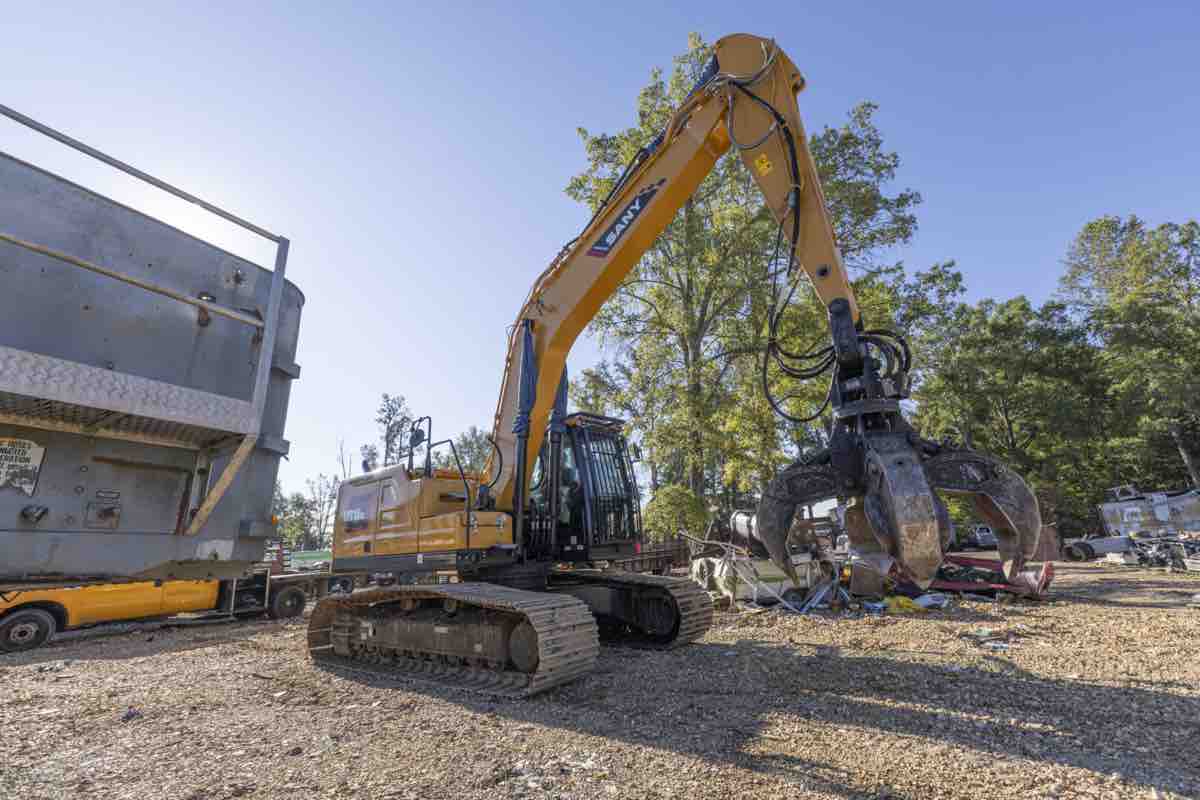
SANY does not build one engine. Depending on machine family, production year, market and emission tier, an SY excavator, truck crane or concrete pump may be fitted with a Japanese, American, European or Chinese diesel — Isuzu and Mitsubishi are common on smaller and mid-size excavators, Cummins appears widely on larger machines and cranes, and Deutz and Perkins show up in specific families and markets.
That matters for ordering: the engine filter set is chosen by the engine, not by the machine badge. Two SY215s from different years and markets can take different oil filters. Always quote your machine model, machine serial number and the engine nameplate data.
Service intervals
Treat the table below as the shape of a normal diesel service plan, then confirm the exact hours against the operation and maintenance manual for your engine. Emission-controlled engines with aftertreatment often run different oil drain intervals from the same displacement without it.
| Interval | Typical scope |
|---|---|
| Daily / 10 h | Oil and coolant level, drain the fuel/water separator bowl, empty the air pre-cleaner dust bowl, check for leaks, blow the radiator and cooler cores clear, check belt condition. |
| 250 h | Engine oil and oil filter (many engines; some extend to 500 h on specified oil), air filter inspection, battery and charging check, hydraulic oil level and return filter inspection. |
| 500 h | Fuel filters — primary/water separator and secondary/fine — plus air filter replacement if not already done, crankcase breather element, hydraulic return filter, pilot filter. |
| 1000 h | Valve clearance check, coolant condition and inhibitor test, safety (secondary) air element, drive belt replacement, air-conditioning and cab filters, hydraulic tank breather. |
| 2000 h / annually | Coolant change, injector and turbo inspection, hydraulic oil change per oil analysis, fuel tank cleaning, aftertreatment inspection where fitted. |
Two intervals are worth shortening rather than stretching: the fuel filters if you fuel from a bowser or drums, and the air filters if you work in demolition, crushing or dry earthmoving. Both are cheap relative to what they protect.
The filter categories you actually order
- Engine oil filter — spin-on or cartridge. Match the engine, not the machine.
- Fuel primary / water separator — the element with the drain bowl. Its job is water, and water is what kills common-rail injectors.
- Fuel secondary (fine) filter — the last defence before the injection system; micron rating is not optional on common-rail engines.
- Air primary + safety element — the safety element stays in place while the primary is serviced. Do not skip it and do not wash primary elements.
- Crankcase breather / CCV element — often forgotten; a blocked one raises crankcase pressure and pushes oil past seals.
- Hydraulic return, pilot and drain filters — not engine parts, but they sit in the same service kit for most machine owners.
- Cab fresh-air and recirculation filters — the cheapest way to keep dust out of the operator's lungs and the evaporator clean.
Order these as a kit per service interval rather than one at a time. It costs less to ship and it stops the "we skipped the breather because it wasn't in the box" failure mode.
Fault patterns we see most often
Power loss under load, no fault code. Usually fuel restriction: a partly blocked secondary filter, a collapsing suction hose, a dirty tank pickup strainer or water in the system. Check filter restriction and fuel pressure before touching the injectors.
White smoke on start that clears slowly. Unburnt fuel — cold-start aid, low compression or injector condition. Persistent white smoke when warm, with coolant loss and a pressurising expansion tank, points at a head gasket or liner seal and should stop work immediately.
Blue smoke. Oil burning: worn valve guides or rings, or an overfilled engine. Also check the turbo drain line, which cokes and backs oil up past the turbine seal.
Black smoke with high exhaust temperature. Too much fuel for the air available — restricted air filter, a leaking charge-air pipe or boot, a fouled charge-air cooler, or a turbo that is not making boost.
Overheating. Nine times out of ten it is airflow, not the thermostat: cores packed with dust and chaff on the inlet face, a damaged fan shroud, or a missing radiator seal that lets hot air recirculate. Clean cores from the clean side outward at low pressure. Coolant mixed wrong — or topped up with plain water — is the next most common cause, because it drops both boiling point and corrosion protection.
Hard starting when hot. Often a leaking return line or a failed check valve letting fuel drain back overnight or during a hot soak, rather than a starting system fault.
Oil level rising between services. Fuel dilution from injector leak-off or a failing lift pump diaphragm. Do not keep running it — diluted oil loses film strength and takes bearings with it.
Two habits that save engines
Sample and analyse the oil at every change. Trends in iron, copper, silicon (dirt) and fuel dilution warn you weeks before a failure, and the cost per sample is trivial next to a rebuild.
Log every service with hours, part numbers fitted and the oil grade used. When something does fail, that log is the difference between a warranty claim you can support and an argument you cannot win.
For the next service, start with the SANY filter category and the excavator model index, then verify any readable label in the part-number lookup. A complete service-kit request should include the machine serial plate, engine nameplate and photos of every old filter; attach them to the quote form.
Last reviewed: Aug 24, 2026