

Jul 28, 2026Reviewed by Changsha export desk
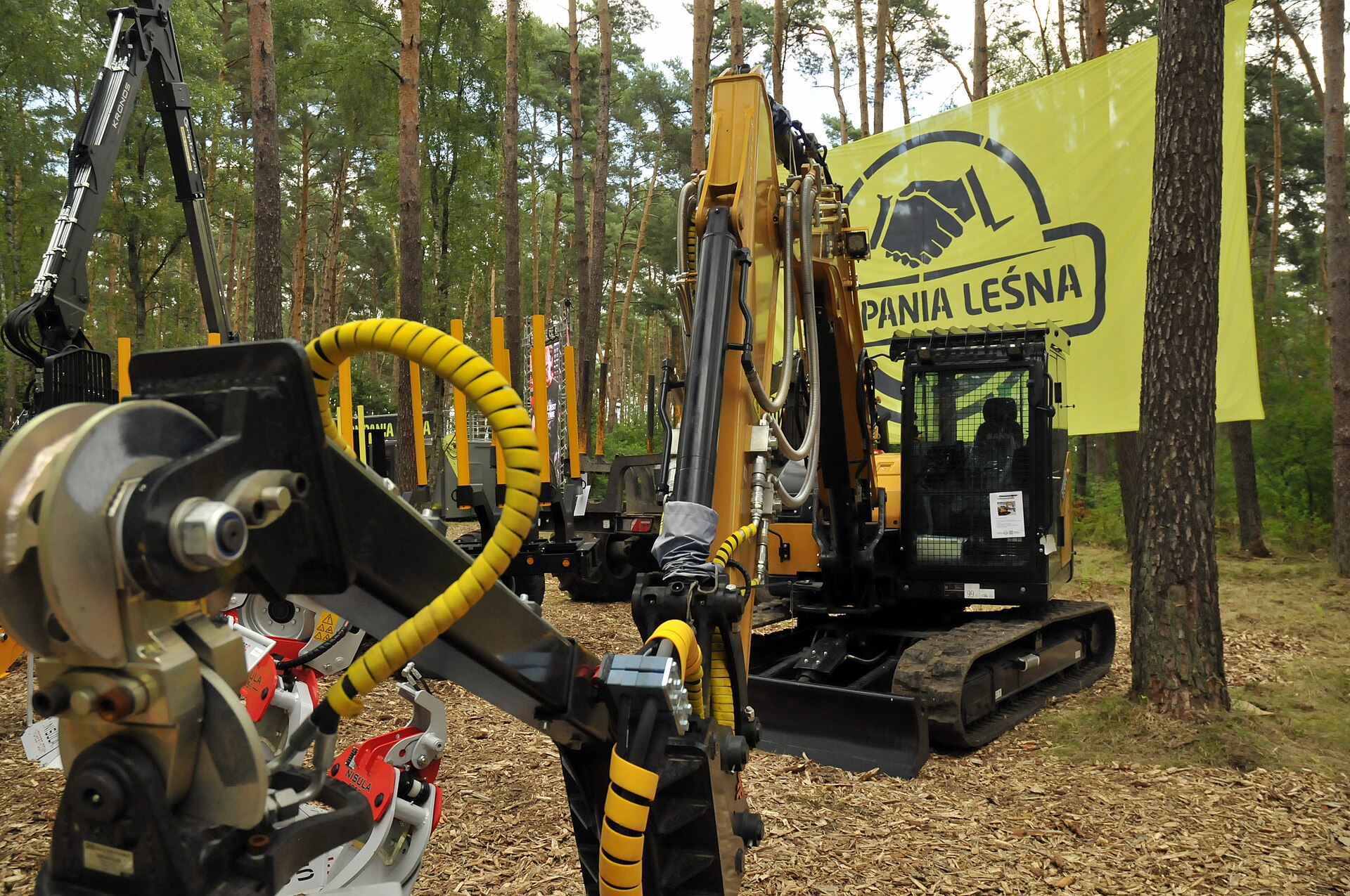
The undercarriage is usually the single largest lifetime parts cost on a tracked excavator — commonly quoted at around half of total maintenance spend over the life of the machine. It is also the assembly most often replaced too late, because it fails gradually and never throws a fault code.
The good news is that undercarriage wear is measurable with a tape measure, a straight edge and a caliper. Twenty minutes per machine, once a month, is enough to turn a surprise into a planned order.
How the system wears
An undercarriage is a closed loop of parts wearing against each other:
- Chain links and bushings carry the load and stretch as the pin/bushing interface wears. Stretch shows up as increased link pitch.
- Track shoes (grousers) lose height to abrasion, especially on rock and concrete.
- Track rollers and the carrier roller wear on the tread and on the flanges that guide the chain.
- The idler wears on its tread and flanges and is pushed by the recoil spring, which absorbs shock.
- The sprocket wears on the tooth flanks where it drives the bushings.
These parts wear as a set, and that is the key planning fact: a stretched chain no longer meshes correctly with the sprocket, so it starts to eat a good sprocket. Fitting a new sprocket to a worn chain does the same thing in reverse.
Measuring wear, item by item
Park on level ground, with the machine safely blocked and the attachment down. Measure both sides — they rarely wear equally, because most operators turn consistently in one direction on site.
| Item | Tool | Method |
|---|---|---|
| Link pitch (chain stretch) | Tape measure | Measure across four or five pins on the tensioned top run, then divide by the number of pitches. Comparing an average of several links removes the error of a single measurement. |
| Bushing outside diameter | Caliper | Measure on the worn (drive) side. Once the hardened case is worn through, wear accelerates sharply. |
| Grouser height | Depth gauge or straight edge + rule | Lay the straight edge across the shoe plate and measure to the top of the bar, on a shoe in the middle of the machine's usual contact area. |
| Roller and idler tread | Straight edge + rule | Compare tread height against the unworn shoulder of the same roller, and check flange height for guiding wear. |
| Sprocket teeth | Visual + straight edge | Look for hooked flanks and a polished, sharpened tooth profile rather than the original symmetrical curve. |
Reading the numbers
Do not work from a single absolute figure copied off the internet. Undercarriage limits are specific to the undercarriage size class, not to the machine badge — a 13-tonne SY135 and a 36-tonne SY365 share nothing dimensionally — and SANY publishes wear limits per undercarriage group in the service manual. What transfers between machines is the method:
- Record the new-part dimension once (from the manual, or from a new part before it is fitted). That is your 0% wear baseline.
- Record the manual's wear limit. That is 100%.
- Every inspection, convert your measurement to a percentage between the two.
Then act on trend, not on a single reading:
| Wear vs new / limit | Action |
|---|---|
| Under 60% | Keep monitoring. Check track tension and look for leaking rollers or idlers. |
| 60–80% | Start planning. Get quotes, confirm lead time, decide chain-only vs full set. |
| Over 80% | Order. On chain and sprocket, running past the limit turns one replacement into two. |
| At 100% | Replace before the next heavy cycle. A jumped chain damages the track frame, final drive and recoil. |
Track tension is the cheapest thing on this list and the most neglected. Too tight multiplies bushing, sprocket and roller wear and loads the final drive; too loose lets the chain climb and jump. Check sag on the top run at the interval in the manual, and check it again after working in mud or clay, which packs the chain and effectively over-tightens it.
What shortens undercarriage life
Habits do more damage than hours:
- Travelling long distances at high speed, and travelling with the machine rotated so the sprocket leads instead of the idler.
- Counter-rotating (spot turns) on abrasive ground when a wider three-point turn would work.
- Side-slope working, which loads one side of every roller flange.
- Leaving mud and rock packed in the chain and around the sprocket overnight.
- Running shoes that are too wide for the material, which increases side load on every link.
Ordering sensibly
Quote your model and serial number — undercarriage components change across production runs, and a chain that is one link pitch out is scrap. Say whether you want a chain assembly, shoes only, or a complete undercarriage set, and measure the shoe width and bolt pattern before ordering shoes. Replacing rollers and idlers as a matched set with a new chain costs more on the invoice and less per hour, because mismatched wear pulls the new parts down to the age of the old ones.
Before requesting a price, open the SANY undercarriage parts hub to identify the component group, then choose the machine on the excavator model index. If a casting or label number is still readable, check it with the part-number lookup; otherwise, send the serial plate and measurement photos with a quote request.
Last reviewed: Aug 24, 2026