

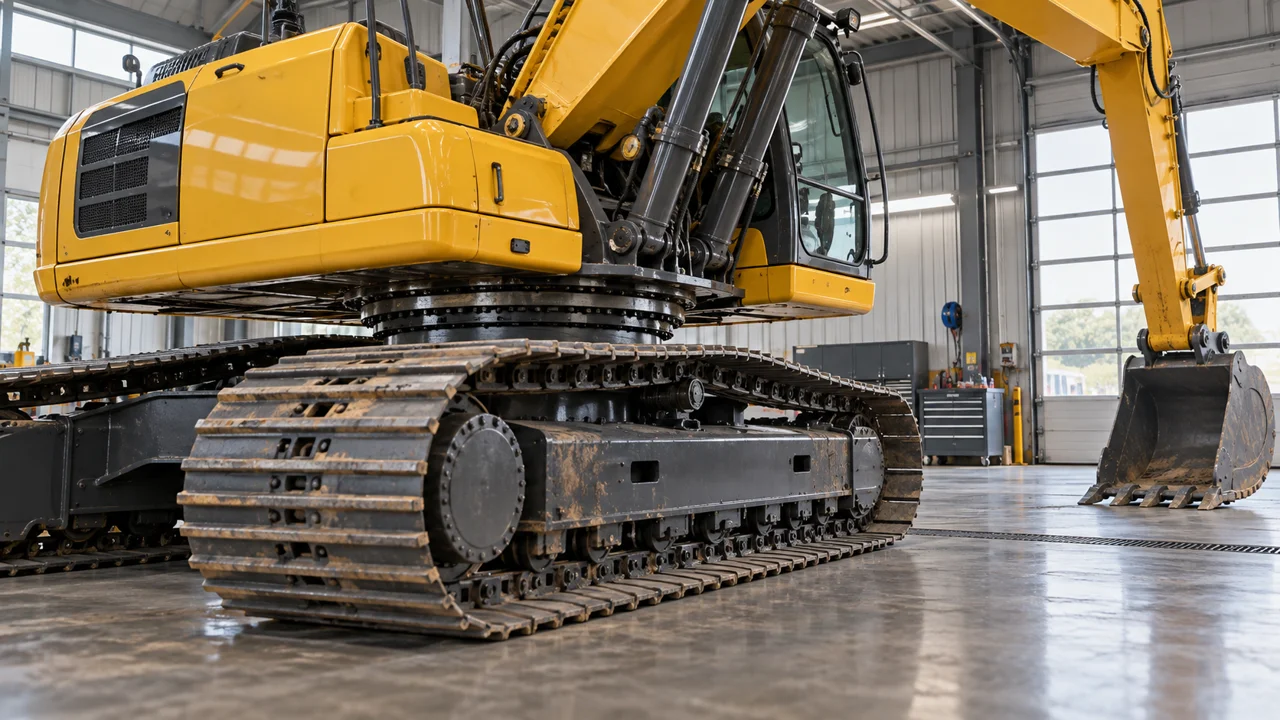
Before requesting excavator swing bearing replacement, organize the inspection around bearing movement, gear condition and hydraulic findings. Use the checks below to prepare a repair-scope discussion and a parts enquiry.
Rothe Erde recommends measuring tilting clearance to determine wear where possible.
In that bearing inspection method, the difference from the reference measurement indicates intervening wear.
Keep the excavator swing motor and gearbox findings alongside the bearing record. For related parts-identification articles, visit our news and guides.
Measure bearing play against a reference
Start the bearing record with the reference measurement and marked inspection positions. The following measurement method follows Rothe Erde bearing-inspection guidance.
Take a reference measurement when the bearing enters operation.
Mark circumferential measurement points from a defined position.
The measurement spans the lower companion structure and the bearing ring attached to the upper structure.
To reduce the influence of companion-structure elastic deformation, the measurement must take place as close to the running system as possible.
The dial gauges should have a measurement accuracy of 0.01mm.
Record that figure under instrument accuracy. Keep the applicable bearing wear limit in a separate field.
Repeat the measurement at the marked position after swivelling the upper structure.
After checking the bearing fixing screws, tilting-clearance or subsidence measurements should be repeated under the same conditions.
A change in axial movement or subsidence indicates running-system wear.
Rothe Erde recommends subsidence measurement where tilting-clearance measurement is not possible.
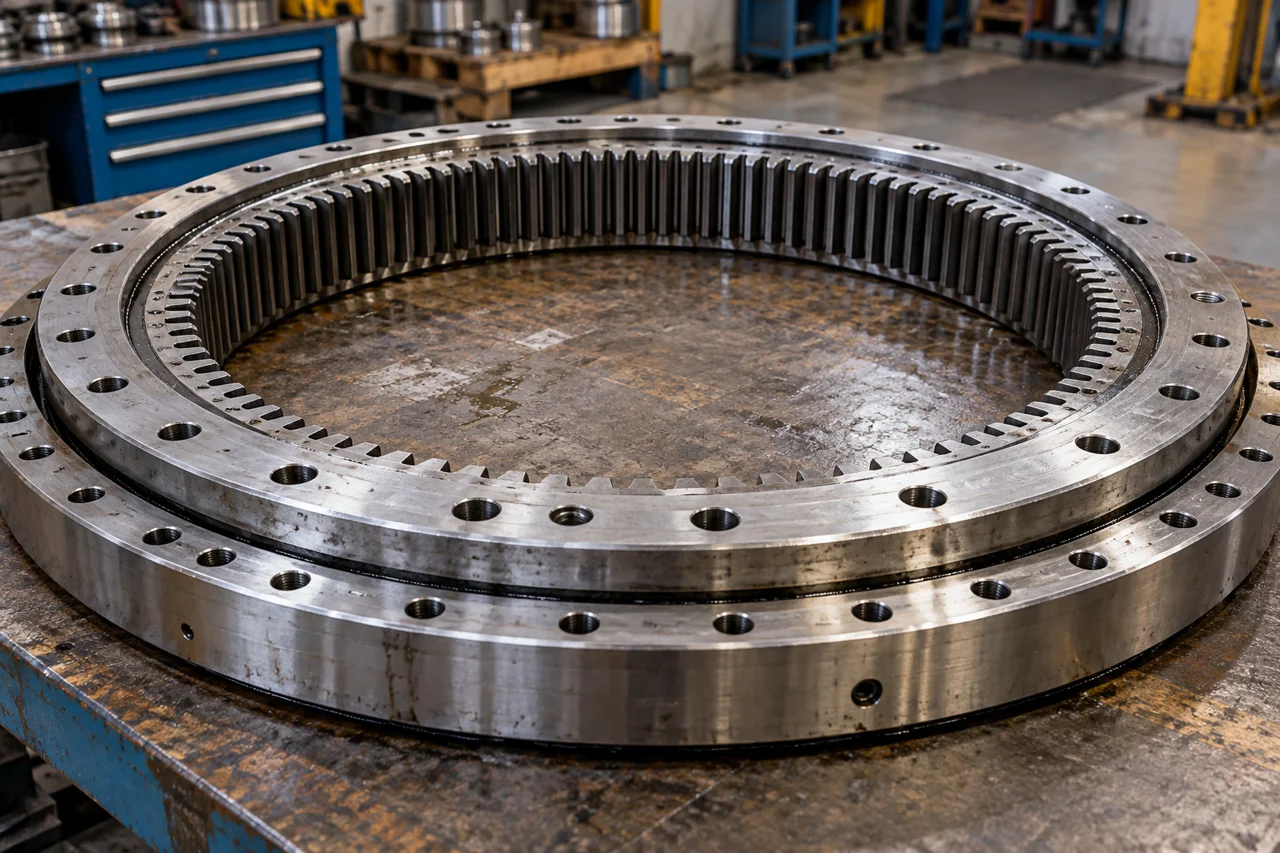
Keep the marked measurement positions with the bearing inspection record.
What to retain with the play measurement
Use these headings for the inspection record:
- Bearing identification and applicable inspection document.
- Reference measurement and marked position.
- Current reading, instrument and measurement conditions.
- Fixing-screw check and the applicable wear limit.
- Gear inspection findings and proposed next action.
For rising wear values, measurements should occur more frequently.
Rothe Erde recommends shutdown when permissible wear values are exceeded.
Inspect the ring gear and pinion
Give gear condition its own entry in the inspection record.
Rothe Erde gear evaluation includes contact pattern, tooth-flank clearance, pinion and crack inspection.
The permissible gear wear limit varies greatly with the application.
In Rothe Erde bearing inspection, lubricant analysis provides information on lubricant condition and raceway wear.
Ask for the contact-pattern, tooth-flank and pinion findings alongside the bearing movement results. Keep photographs and lubricant-analysis results with the corresponding inspection entry.
Case-drain checks: account for the circuit
Danfoss axial-piston pumps and motors require case drains to relieve internal leakage.
In the Danfoss circuit guidance, flow passing over charge-relief and loop-flushing valves must also leave through the case-drain line.
For a case-drain test request, identify the installed motor and the applicable test procedure. Ask for the circuit configuration, test conditions, measured case flow and acceptance criterion in the report.
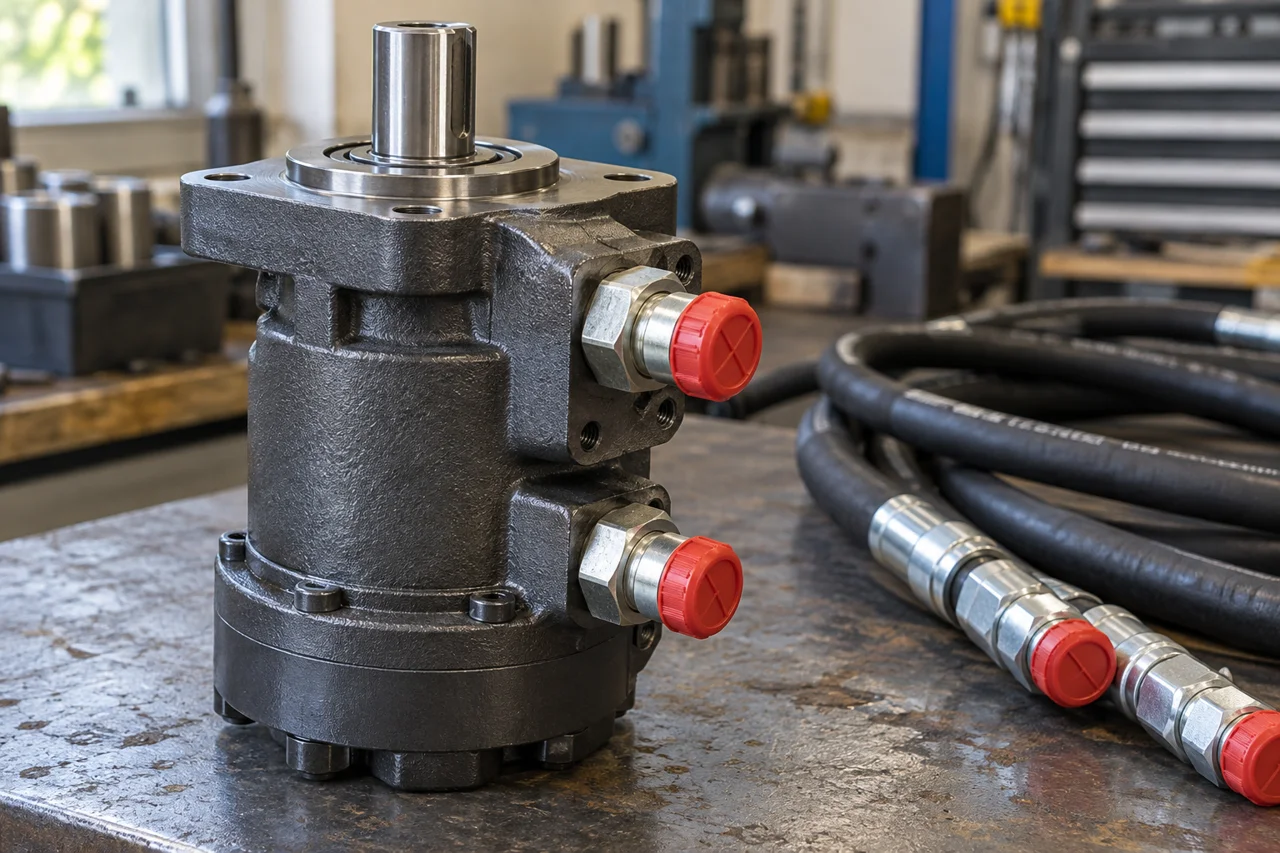
Identify the installed motor and attach its test record to the enquiry.
Danfoss H1F service-manual example
The Danfoss service manual calls for securing the machine or disabling/disconnecting the mechanism to prevent unintended movement during servicing.
In this closed-circuit motor example, excessive internal leakage lowers charge pressure and affects performance.
The internal-leakage diagnostic calls for the loop-flushing defeat option when measuring case flow.
If case flow is excessive, the motor may require major repair.
Keep this example tied to its named motor and service procedure. For the installed excavator swing motor, request the matching test instructions and retain the measured result with those instructions.
Gearbox checks: noise, mountings and oil
In Bonfiglioli gearbox guidance, unusual noises often signal internal wear, misalignment, gear damage or bearing failure.
Abnormal noise at the gear-unit mounting can be caused by loose bolts, misaligned mounts or vibrations transmitted from connected equipment.
Gearbox oil leaks can be caused by worn seals, overfilled units, damaged housings, or excessive pressure or temperature.
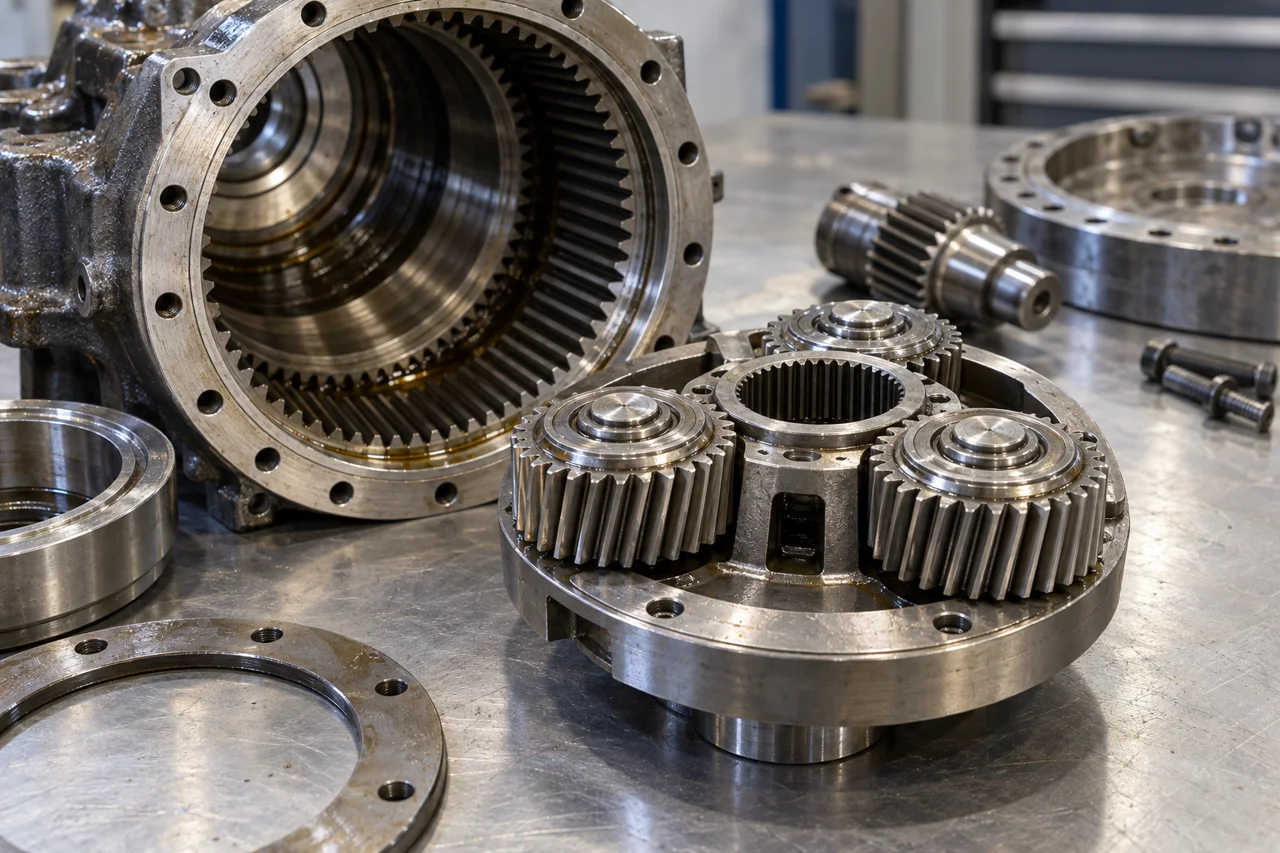
Record gear condition separately from the bearing-play and hydraulic-test findings.
For the oil-level check, follow the gearbox guidance below:
Check gearbox oil using its sight glass or dipstick at rest on a level surface.
Compare the oil level against the fill mark specified in the gearbox user manual.
Use the manufacturer-recommended gearbox lubricant, viscosity grade and formulation.
Prepare the swing bearing replacement enquiry
Bring the bearing, motor and gearbox records together before choosing the requested part. Use the following checklist for the handoff:
- Identify the excavator and installed assemblies; attach readable nameplate photographs.
- Attach the bearing reference and current readings with their marked positions.
- Include the gear contact-pattern, pinion and tooth-flank findings.
- Attach the motor test procedure, case-flow result and test conditions.
- Include the gearbox mounting, oil-level and gear-condition observations.
- State the requested repair scope and the parts you want quoted.
Use our excavator nameplate guide to prepare the identification photos. Then send the identification and inspection records for a parts enquiry.
Sources
-
Rothe Erde — Bearing inspection and wear measurement
-
Rothe Erde — Inspection and Maintenance
-
Danfoss — Transmission Circuit Recommendations
-
Danfoss — H1F Service Manual
-
Bonfiglioli — Gearbox FAQ
Last reviewed: Oct 28, 2026